Wiring Sensors
Connect soil moisture, temperature, humidity, and rain sensors to your MudPi unit.
Sensor Overview
MudPi supports both analog and digital sensors. This guide covers the most common sensors used in garden automation.
DHT22 Temperature & Humidity Sensor
The DHT22 provides both temperature and humidity readings from a single sensor, making it ideal for greenhouse monitoring.
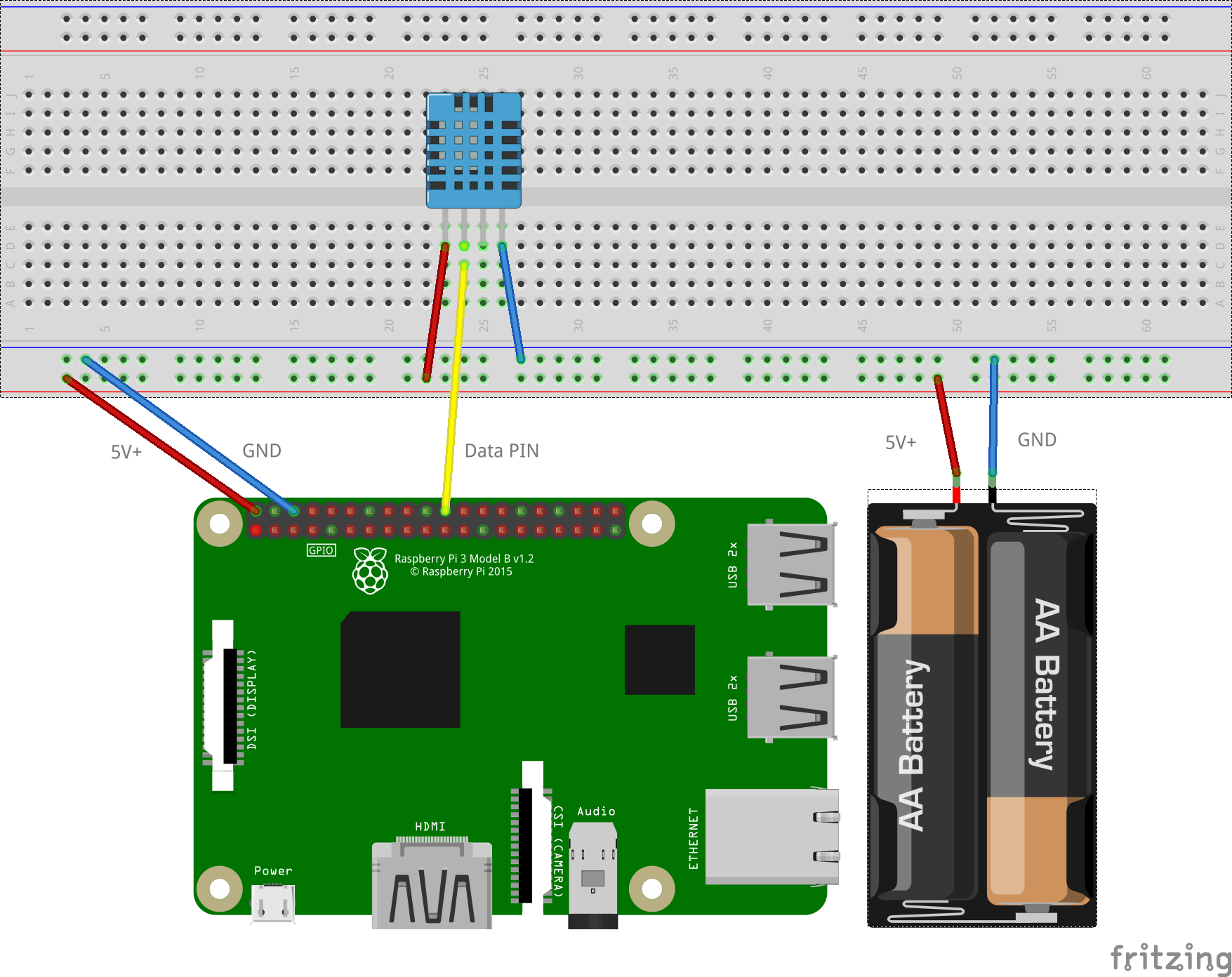
| DHT22 Pin | Connection | Notes |
|---|---|---|
| VCC | 3.3V | — |
| Data | GPIO pin | Add 10KΩ pull-up resistor to VCC |
| GND | Ground | — |
Configuration for a DHT22 sensor:
{
  "pin": 22,
  "type": "dht22",
  "name": "Greenhouse Climate",
  "poll_interval": 60
}
Capacitive Soil Moisture Sensor
Capacitive sensors are preferred over resistive ones as they don't corrode over time. They output an analog voltage that corresponds to moisture level.
Why Capacitive?
Since the Raspberry Pi doesn't have native analog inputs, you'll need an ADC (Analog to Digital Converter) like the ADS1115 or MCP3008:
{
  "pin": 0,
  "type": "soil_moisture",
  "name": "Raised Bed A",
  "adc": "ads1115",
  "poll_interval": 30
}
Rain Sensor
Rain detection sensors use a conductive pad that changes resistance when wet. Connect the digital output to a GPIO pin for simple wet/dry detection.
{
  "pin": 27,
  "type": "rain",
  "name": "Rain Detector",
  "poll_interval": 10
}
Tips for Outdoor Wiring
Weather Protection
- Use weatherproof enclosures for your Pi and relay boards. IP65-rated boxes work well.
- Solder connections rather than using breadboards for long-term setups. Breadboard connections loosen over time.
- Seal wire entry points with silicone sealant or cable glands to prevent moisture ingress.
- Keep wire runs short to minimize signal noise. Use shielded cable for runs longer than 2 meters.
- Strain-relieve cables where they enter enclosures to prevent wire fatigue from wind movement.